Why Is There No IPv5? Story Behind the Missing Internet Protocol
 Chan
Chan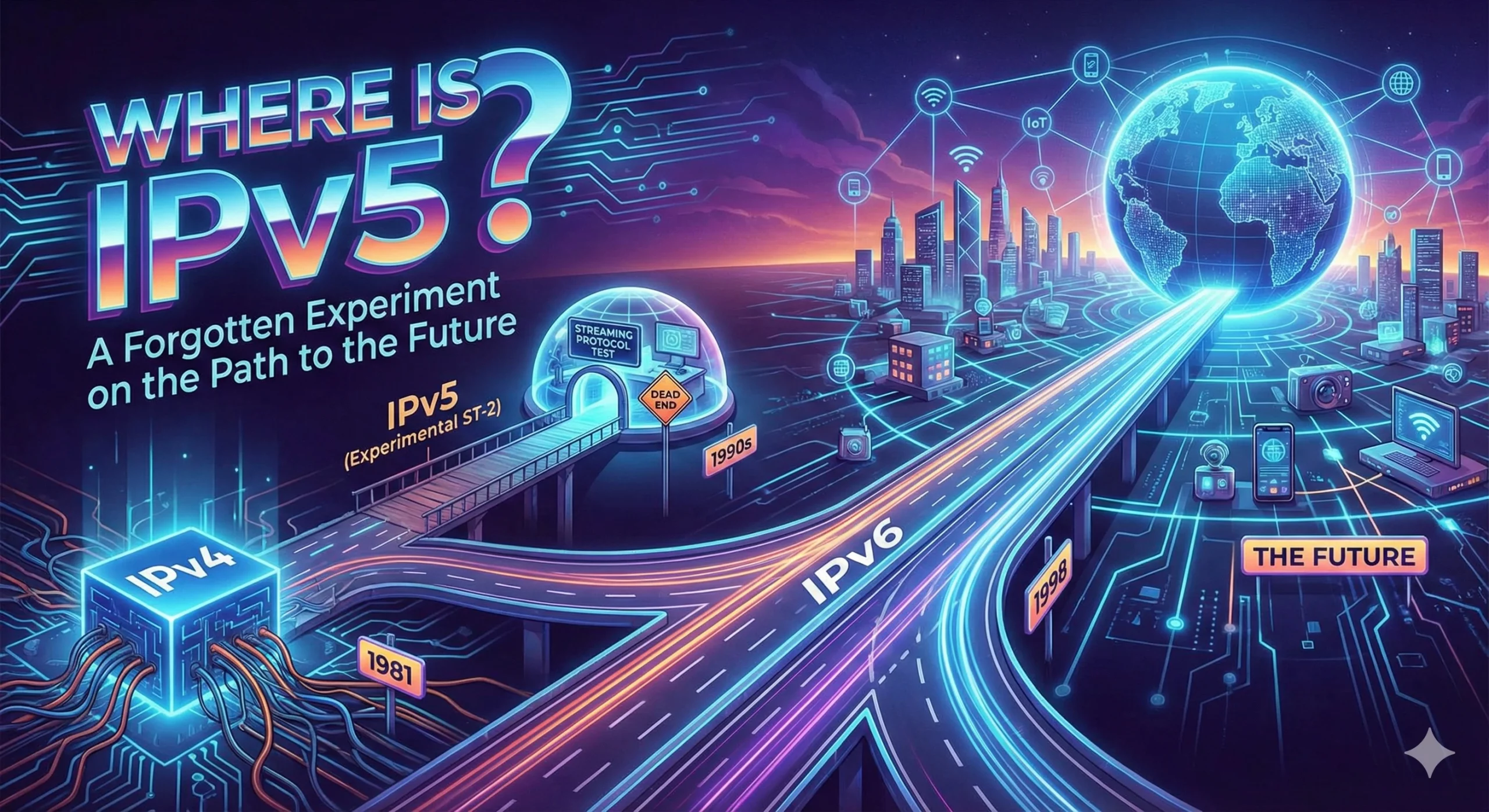
When discussing Internet Protocols, most people are familiar with IPv4 and IPv6. But you might wonder: What happened to IPv5? Why does it seem like the Internet skipped from IPv4 to IPv6? Let’s dive into the fascinating history behind this “missing” protocol.
Table of Contents
What Is IPv5?
IPv5, officially known as the Internet Stream Protocol (ST), was an experimental protocol developed in the late 1970s and 1980s. It was designed to support real-time multimedia data streaming like voice and video over IP networks. Unlike IPv4, which operates on a connectionless basis, IPv5 aimed to create a connection-oriented communication system for better multimedia performance.
Why Didn’t IPv5 Become the Next Main Internet Protocol?
Despite its innovative intent, IPv5 was never widely adopted. Here’s why:
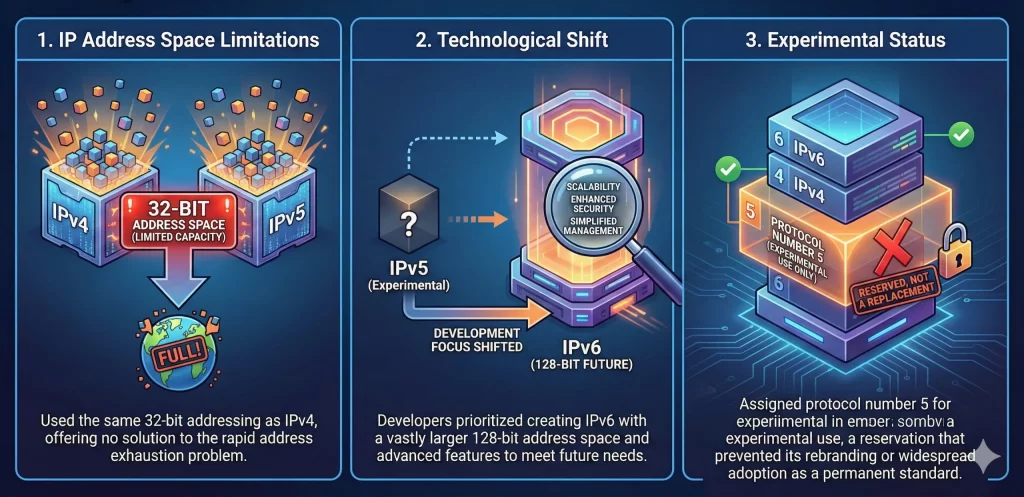
1. IP Address Space Limitations
IPv5 used the same 32-bit address space as IPv4. With the rapid growth of the Internet, IPv4 address exhaustion became a critical issue, making IPv5’s addressing system equally inadequate for future needs.
2. Technological Shift
As the need for a more scalable solution grew, developers focused on creating IPv6, which introduced 128-bit addressing, solving the problem of address shortages, and adding enhanced features like built-in security and simplified network management.
3. Experimental Status
IPv5 was never intended as a long-term replacement for IPv4. It was assigned the protocol number 5 for experimental use, and this reservation in the protocol stack meant it couldn’t later be rebranded as a future version of IP.
Why IPv6 Replaced IPv4 (and Not IPv5)
IPv6 was designed as a comprehensive upgrade to IPv4, addressing limitations like address shortages and improving the efficiency of Internet communication. It became the standard protocol for modern networking needs, leaving IPv5 as an interesting footnote in Internet history.
IPv5: A Stepping Stone in Internet Protocol Development
Though IPv5 was never widely implemented, it played a significant role in shaping the development of Internet protocols. Its experimentation with multimedia streaming paved the way for technologies we now take for granted, like VoIP (Voice over IP) and real-time video conferencing.
Conclusion
So, while there is no “missing” protocol, IPv5 is a testament to the trial-and-error process that drives technological innovation. It’s a reminder that every step, even experimental ones, contributes to the digital landscape we enjoy today.
Trusted IPv4 Leasing for Business Growth
Get enterprise-grade IPv4 space quickly, with seamless deployment and end-to-end management.
Get Started with i.leaseFAQs
Was IPv5 ever used?
Yes, but only as an experimental protocol for multimedia streaming applications. It was never widely adopted.
Why was IPv5 skipped?
It wasn’t skipped—it was used experimentally. However, its limitations, like 32-bit addressing, made it unsuitable for long-term adoption.
What makes IPv6 better?
IPv6 offers 128-bit addressing, better security, and simplified routing, solving issues IPv4 and IPv5 couldn’t address.
Related Posts
How much does a /24 IPv4 block cost in 2026?
IPv4 scarcity continues to shape internet infrastructure, with /24 blocks still trading actively on global markets despite growing IPv6 adoption. Key points A /24 IPv4 block usually costs between $6,000 and $15,000 in 2026. Cloud providers, hosting companies and SaaS providers need IPv4 addresses so prices stay high. IPv4 addresses are like an asset because they are scarce. What is a /24 IPv4 block A /24 IPv4 blockRead more Related Posts How much does a /24 IPv4 block cost in 2026? IPv4 scarcity continues to shape internet infrastructure, with /24 blocks still trading actively on global markets despite growing IPv6 adoption. Key Read more The future of IPv4 markets Despite IPv6 expansion, scarcity keeps IPv4 valuable, sustaining a global secondary market where addresses increasingly function as tradable digital assets.Finite Read more Common Myths About Selling IP Addresses The IPv4 secondary market is often shrouded in mystery, leading many organizations to sit on valuable digital assets because they Read more .related-post {} .related-post .post-list { text-align: left; } .related-post .post-list .item { margin: 5px; padding: 10px; } .related-post .headline { font-size: 18px !important; color: #999999 !important; } .related-post .post-list .item .post_thumb { max-height: 220px; margin: 10px 0px; padding: 0px; display: block; } .related-post .post-list .item .post_title { font-size: 16px; color: #3f3f3f; margin: 10px 0px; padding: 0px; display: block; text-decoration: none; } .related-post .post-list .item .post_excerpt { font-size: 13px; color: #3f3f3f; margin: 10px 0px; padding: 0px; display: block; text-decoration: none; } @media only screen and (min-width: 1024px) { .related-post .post-list .item { width: 30%; } } @media only screen and (min-width: 768px) and (max-width: 1023px) { .related-post .post-list .item { width: 90%; } } @media only screen and (min-width: 0px) and (max-width: 767px) { .related-post .post-list .item { width: 90%; } }
The future of IPv4 markets
Despite IPv6 expansion, scarcity keeps IPv4 valuable, sustaining a global secondary market where addresses increasingly function as tradable digital assets. Finite IPv4 supply has created a mature secondary market where address blocks are bought, sold and leased worldwide. Prices fluctuate, but persistent demand from cloud, hosting and AI infrastructure suggests IPv4 markets will remain active for years. What happened The rise of a digital commodity The global market forRead more Related Posts How much does a /24 IPv4 block cost in 2026? IPv4 scarcity continues to shape internet infrastructure, with /24 blocks still trading actively on global markets despite growing IPv6 adoption. Key Read more The future of IPv4 markets Despite IPv6 expansion, scarcity keeps IPv4 valuable, sustaining a global secondary market where addresses increasingly function as tradable digital assets.Finite Read more Common Myths About Selling IP Addresses The IPv4 secondary market is often shrouded in mystery, leading many organizations to sit on valuable digital assets because they Read more .related-post {} .related-post .post-list { text-align: left; } .related-post .post-list .item { margin: 5px; padding: 10px; } .related-post .headline { font-size: 18px !important; color: #999999 !important; } .related-post .post-list .item .post_thumb { max-height: 220px; margin: 10px 0px; padding: 0px; display: block; } .related-post .post-list .item .post_title { font-size: 16px; color: #3f3f3f; margin: 10px 0px; padding: 0px; display: block; text-decoration: none; } .related-post .post-list .item .post_excerpt { font-size: 13px; color: #3f3f3f; margin: 10px 0px; padding: 0px; display: block; text-decoration: none; } @media only screen and (min-width: 1024px) { .related-post .post-list .item { width: 30%; } } @media only screen and (min-width: 768px) and (max-width: 1023px) { .related-post .post-list .item { width: 90%; } } @media only screen and (min-width: 0px) and (max-width: 767px) { .related-post .post-list .item { width: 90%; } }
Inbound vs. Outbound IPv4 Leasing: A Complete Guide for Enterprises
Understanding IPv4 leasing helps enterprises manage scarce address space, reducing risk and unlocking strategic growth opportunities in today’s digital economy. Key points Distinguishes between inbound (leasing in) and outbound (leasing out) IPv4 approaches and their strategic implications. Highlights contract structures, registry risk management and continuity considerations affecting global number resources. Inbound vs. outbound IPv4 leasing: complete enterprise guide In the post-exhaustion era of Internet Protocol version 4 (IPv4),Read more Related Posts How much does a /24 IPv4 block cost in 2026? IPv4 scarcity continues to shape internet infrastructure, with /24 blocks still trading actively on global markets despite growing IPv6 adoption. Key Read more The future of IPv4 markets Despite IPv6 expansion, scarcity keeps IPv4 valuable, sustaining a global secondary market where addresses increasingly function as tradable digital assets.Finite Read more Common Myths About Selling IP Addresses The IPv4 secondary market is often shrouded in mystery, leading many organizations to sit on valuable digital assets because they Read more .related-post {} .related-post .post-list { text-align: left; } .related-post .post-list .item { margin: 5px; padding: 10px; } .related-post .headline { font-size: 18px !important; color: #999999 !important; } .related-post .post-list .item .post_thumb { max-height: 220px; margin: 10px 0px; padding: 0px; display: block; } .related-post .post-list .item .post_title { font-size: 16px; color: #3f3f3f; margin: 10px 0px; padding: 0px; display: block; text-decoration: none; } .related-post .post-list .item .post_excerpt { font-size: 13px; color: #3f3f3f; margin: 10px 0px; padding: 0px; display: block; text-decoration: none; } @media only screen and (min-width: 1024px) { .related-post .post-list .item { width: 30%; } } @media only screen and (min-width: 768px) and (max-width: 1023px) { .related-post .post-list .item { width: 90%; } } @media only screen and (min-width: 0px) and (max-width: 767px) { .related-post .post-list .item { width: 90%; } }