What is GeoIP and How Does It Work?
 Chan
Chan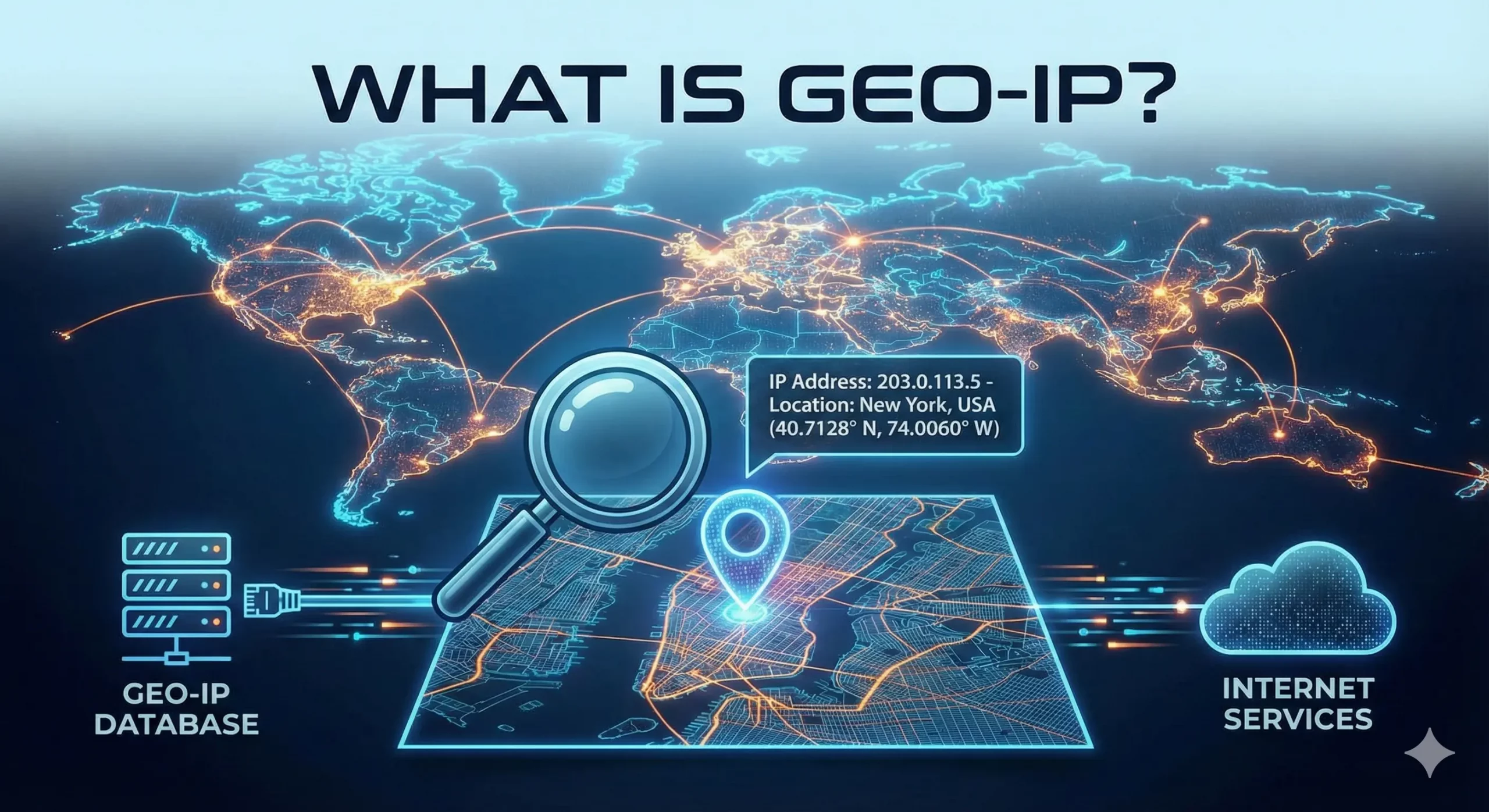
GeoIP is crucial in tailoring online experiences, improving cybersecurity, and powering countless business applications. But what exactly is GeoIP, how does it work, and why is it so important? Let’s dive in.
Table of Contents
What is GeoIP?
GeoIP stands for “Geographical Internet Protocol.” It refers to the technology that determines a user’s geographic location based on their IP (Internet Protocol) address. Every device connected to the Internet is assigned a unique IP address, which acts like a digital identifier. GeoIP leverages this information to pinpoint the device’s physical location, often revealing the country, region, city, and Internet service provider (ISP).
How Does GeoIP Work?
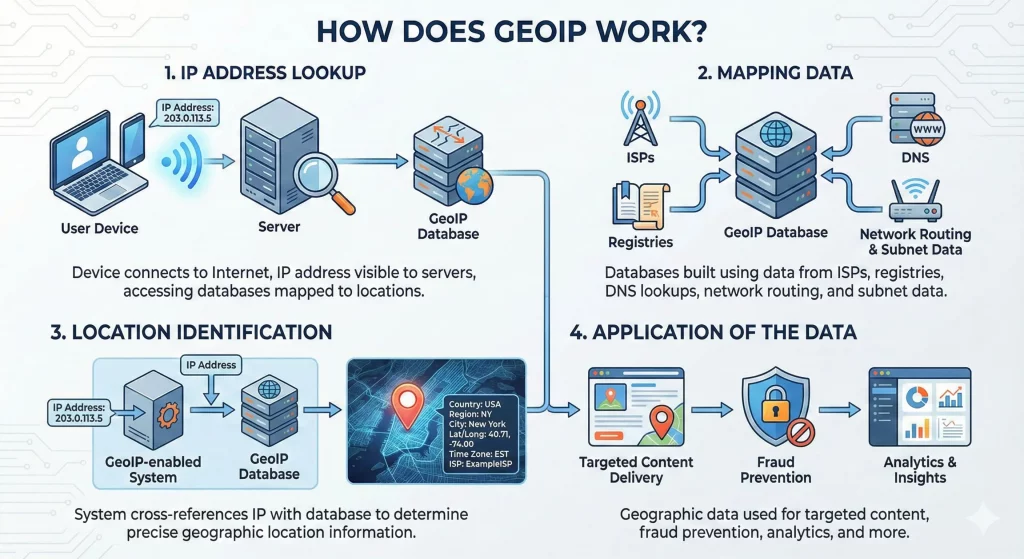
The functionality of GeoIP can be summarized in a few steps:
1. IP Address Lookup
When a device connects to the Internet, its IP address becomes visible to the servers it interacts with. GeoIP technology accesses vast databases of IP addresses mapped to specific geographic locations.
2. Mapping Data
GeoIP databases are built using data from ISPs, registries, and third-party providers. These databases link each IP address to a geographic location based on information like Internet service provider details, DNS (Domain Name System) lookups network routing, and subnet data
3. Location Identification
When a GeoIP-enabled system detects an IP address, it cross-references the address with the database to determine the location. The output may include information such as:
Country, region/state, city, latitude, and longitude (approximate), time zone, ISP organization name.
4. Application of the Data
The geographic data is used for various purposes, such as targeted content delivery, fraud prevention, or analytics.
Significance of GeoIP in the Digital World
GeoIP has become an indispensable tool across multiple industries, offering benefits in areas such as:
1. Personalized Content Delivery:
Websites and apps use GeoIP to customize user experiences, such as showing location-specific language options, currency displays, or tailored recommendations.
2. Digital Marketing:
Marketers leverage GeoIP to serve hyperlocalized ads, ensuring ad campaigns are more relevant and effective.
3. Cybersecurity:
GeoIP is vital for detecting and mitigating online threats. For example, unusual login attempts from regions where a user is not typically active could trigger security alerts.
4. Regulatory Compliance:
Businesses operating in multiple countries use GeoIP to enforce location-based restrictions, such as GDPR compliance in the EU or content licensing regulations for streaming platforms.
5. Fraud Detection and Prevention:
E-commerce platforms and payment gateways rely on GeoIP to identify potentially fraudulent transactions, such as mismatches between billing addresses and IP locations.
6. Traffic Analytics:
GeoIP enhances web analytics by providing insights into where users are coming from, helping businesses optimize their reach.
Challenges and Limitations
- Accuracy Issues: GeoIP data may not always be precise, especially at the city or street level.
- VPNs and Proxies: Users masking their IP addresses with virtual private networks (VPNs) or proxies can bypass GeoIP detection.
- Database Updates: GeoIP databases require regular updates to stay accurate as IP address assignments change.
Conclusion
GeoIP bridges the gap between the digital and physical worlds by providing location-based insights. Whether you’re running a global e-commerce site, ensuring compliance with local laws, or simply delivering personalized content, GeoIP technology enhances efficiency, security, and user satisfaction in countless ways. However, as the technology evolves, businesses must balance its potential with considerations for accuracy, privacy, and ethical use.
Trusted IPv4 Leasing for Business Growth
Get enterprise-grade IPv4 space quickly, with seamless deployment and end-to-end management.
Get Started with i.leaseRelated Posts
How much does a /24 IPv4 block cost in 2026?
IPv4 scarcity continues to shape internet infrastructure, with /24 blocks still trading actively on global markets despite growing IPv6 adoption. Key points A /24 IPv4 block usually costs between $6,000 and $15,000 in 2026. Cloud providers, hosting companies and SaaS providers need IPv4 addresses so prices stay high. IPv4 addresses are like an asset because they are scarce. What is a /24 IPv4 block A /24 IPv4 blockRead more Related Posts How much does a /24 IPv4 block cost in 2026? IPv4 scarcity continues to shape internet infrastructure, with /24 blocks still trading actively on global markets despite growing IPv6 adoption. Key Read more The future of IPv4 markets Despite IPv6 expansion, scarcity keeps IPv4 valuable, sustaining a global secondary market where addresses increasingly function as tradable digital assets.Finite Read more Common Myths About Selling IP Addresses The IPv4 secondary market is often shrouded in mystery, leading many organizations to sit on valuable digital assets because they Read more .related-post {} .related-post .post-list { text-align: left; } .related-post .post-list .item { margin: 5px; padding: 10px; } .related-post .headline { font-size: 18px !important; color: #999999 !important; } .related-post .post-list .item .post_thumb { max-height: 220px; margin: 10px 0px; padding: 0px; display: block; } .related-post .post-list .item .post_title { font-size: 16px; color: #3f3f3f; margin: 10px 0px; padding: 0px; display: block; text-decoration: none; } .related-post .post-list .item .post_excerpt { font-size: 13px; color: #3f3f3f; margin: 10px 0px; padding: 0px; display: block; text-decoration: none; } @media only screen and (min-width: 1024px) { .related-post .post-list .item { width: 30%; } } @media only screen and (min-width: 768px) and (max-width: 1023px) { .related-post .post-list .item { width: 90%; } } @media only screen and (min-width: 0px) and (max-width: 767px) { .related-post .post-list .item { width: 90%; } }
The future of IPv4 markets
Despite IPv6 expansion, scarcity keeps IPv4 valuable, sustaining a global secondary market where addresses increasingly function as tradable digital assets. Finite IPv4 supply has created a mature secondary market where address blocks are bought, sold and leased worldwide. Prices fluctuate, but persistent demand from cloud, hosting and AI infrastructure suggests IPv4 markets will remain active for years. What happened The rise of a digital commodity The global market forRead more Related Posts How much does a /24 IPv4 block cost in 2026? IPv4 scarcity continues to shape internet infrastructure, with /24 blocks still trading actively on global markets despite growing IPv6 adoption. Key Read more The future of IPv4 markets Despite IPv6 expansion, scarcity keeps IPv4 valuable, sustaining a global secondary market where addresses increasingly function as tradable digital assets.Finite Read more Common Myths About Selling IP Addresses The IPv4 secondary market is often shrouded in mystery, leading many organizations to sit on valuable digital assets because they Read more .related-post {} .related-post .post-list { text-align: left; } .related-post .post-list .item { margin: 5px; padding: 10px; } .related-post .headline { font-size: 18px !important; color: #999999 !important; } .related-post .post-list .item .post_thumb { max-height: 220px; margin: 10px 0px; padding: 0px; display: block; } .related-post .post-list .item .post_title { font-size: 16px; color: #3f3f3f; margin: 10px 0px; padding: 0px; display: block; text-decoration: none; } .related-post .post-list .item .post_excerpt { font-size: 13px; color: #3f3f3f; margin: 10px 0px; padding: 0px; display: block; text-decoration: none; } @media only screen and (min-width: 1024px) { .related-post .post-list .item { width: 30%; } } @media only screen and (min-width: 768px) and (max-width: 1023px) { .related-post .post-list .item { width: 90%; } } @media only screen and (min-width: 0px) and (max-width: 767px) { .related-post .post-list .item { width: 90%; } }
Inbound vs. Outbound IPv4 Leasing: A Complete Guide for Enterprises
Understanding IPv4 leasing helps enterprises manage scarce address space, reducing risk and unlocking strategic growth opportunities in today’s digital economy. Key points Distinguishes between inbound (leasing in) and outbound (leasing out) IPv4 approaches and their strategic implications. Highlights contract structures, registry risk management and continuity considerations affecting global number resources. Inbound vs. outbound IPv4 leasing: complete enterprise guide In the post-exhaustion era of Internet Protocol version 4 (IPv4),Read more Related Posts How much does a /24 IPv4 block cost in 2026? IPv4 scarcity continues to shape internet infrastructure, with /24 blocks still trading actively on global markets despite growing IPv6 adoption. Key Read more The future of IPv4 markets Despite IPv6 expansion, scarcity keeps IPv4 valuable, sustaining a global secondary market where addresses increasingly function as tradable digital assets.Finite Read more Common Myths About Selling IP Addresses The IPv4 secondary market is often shrouded in mystery, leading many organizations to sit on valuable digital assets because they Read more .related-post {} .related-post .post-list { text-align: left; } .related-post .post-list .item { margin: 5px; padding: 10px; } .related-post .headline { font-size: 18px !important; color: #999999 !important; } .related-post .post-list .item .post_thumb { max-height: 220px; margin: 10px 0px; padding: 0px; display: block; } .related-post .post-list .item .post_title { font-size: 16px; color: #3f3f3f; margin: 10px 0px; padding: 0px; display: block; text-decoration: none; } .related-post .post-list .item .post_excerpt { font-size: 13px; color: #3f3f3f; margin: 10px 0px; padding: 0px; display: block; text-decoration: none; } @media only screen and (min-width: 1024px) { .related-post .post-list .item { width: 30%; } } @media only screen and (min-width: 768px) and (max-width: 1023px) { .related-post .post-list .item { width: 90%; } } @media only screen and (min-width: 0px) and (max-width: 767px) { .related-post .post-list .item { width: 90%; } }